

Many churches feel they need a big team, a big budget, or a big plan before they can do anything about safety. Not so. Whether you are starting a safety plan from scratch or strengthening one you already have, some of the most useful steps cost nothing at all.
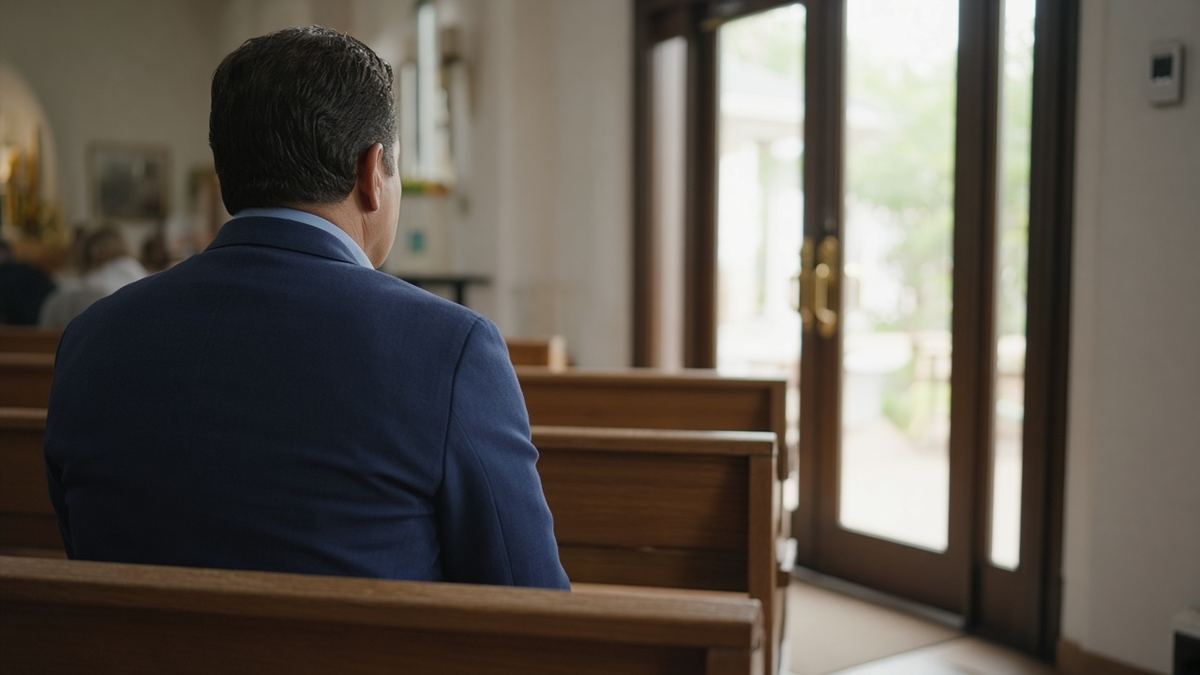
Here's one you can take this Sunday: ask one trained team member to sit near the main entrance during the service. Not up front.
Why the entrance matters
Think of a shepherd at the gate of the sheepfold. The shepherd isn't standing in the middle of the flock. He sits where the flock comes and goes. From there he can welcome sheep that wander in late, see who is approaching, and call for help if something doesn't look right.
Your main entrance works the same way. Nearly everyone who comes into the service comes through that door. Most will be members, visitors, and families running a few minutes behind. A person seated near the entrance is in the best spot to welcome them, and also the best spot to notice when something seems off.
When the whole safety team, every usher, and half the elders sit up front, the entrance is behind everyone. Nobody is watching the one place everyone comes in. Moving one prepared person to the door is a small change with an outsized effect on both hospitality and awareness.
What that person does this Sunday
From their seat by the door, they can:
- Greet latecomers warmly. A late visitor is often nervous. A kind word and help finding a seat can make them want to come back.
- See who comes in. Not with suspicion — just with attention. They are simply aware of the room and the door.
- Quietly alert the team if something seems off. This does not mean stepping in or confronting anyone. It means letting the right people know, in a way your team has agreed on ahead of time.
That's it. They still worship, still listen to the sermon, and still take part in the service. They're just doing it from the right chair. It costs nothing. It's just the right person in the right chair.
- One trained team member asked and willing to serve at the entrance
- Seat chosen with a clear view of the main entrance (not up front)
- Clear, easy path from that seat to the door
- Agreed way to quietly alert the team
- Pastor or leadership informed
- Role noted in your safety plan or Sunday notes
- Rotation set for the next few Sundays
Have 2 more minutes? Here's how to put it in place.
Pick the right person
Choose someone who is calm, friendly, and trusted, and who has had whatever training your church provides for its safety or usher team. Hospitality matters as much as alertness. The best entrance-seat person is often the member who already notices people and remembers names — not necessarily the person with the most formal background.
Pick the right chair
Walk your sanctuary before Sunday and find a seat with a clear view of the main entrance and an easy path to the door. Sit there for a minute during the week if you can. Check sight lines when the room is empty and again when it is full. Avoid seats that put the person's back fully to the door, and avoid spots that block traffic for families with strollers or wheelchairs.
Agree on how to quietly alert
Decide ahead of time who they tell and how: a text, a hand signal, a radio code in plain language, or a quiet walk to a team lead. Keep it simple and practice it once. The goal is awareness and communication, not confrontation. Write the method down so a substitute can follow it next month.
Rotate, write it down, and keep it warm
Share the role among a few people so no one misses worship week after week. Talk with your pastor or leadership so the role fits your church's culture and any plan you already have. Add it to your safety plan, even if your plan is a single page today. A written note turns a good idea into a habit.
Prompts you can try with an AI assistant
If you use an AI assistant, these prompts can help you think through this step for your own church. Review any answer with your leadership and adjust it to fit your situation.
"Our church has about [number] people on Sunday and one main entrance. Help me write a short, friendly description of an 'entrance seat' role for a safety team member who sits near the door during the service.""Suggest three simple, quiet ways a church team member seated by the entrance could alert the rest of the safety team during a service without disturbing worship.""Give me five warm phrases a church member could use to welcome someone who arrives late to the service and help them find a seat."A step toward a stronger plan
No single step makes a church completely safe, and this one does not promise that either. But it is a real step, and it costs nothing. It puts welcome and watchfulness in the same seat, which is a good picture of what a church safety ministry can be.
If you do not have a safety plan yet, this is a fine place to start. If you already do, ask whether anyone is watching your main entrance during the service. Sometimes the best improvement isn't new equipment or a bigger team. It's just the right person in the right chair.
"Be watchful, stand firm in the faith, act like men, be strong." — 1 Corinthians 16:13 (ESV)
Steeple Guard (SG.ai) shares practical, awareness-level ideas to help churches start or strengthen a safety plan. Adapt every step to your church, your leadership, and your local guidance. No single step guarantees protection.