

Greeters see everyone first. When there is no parking team outside, greeters and ushers are often the first line of welcome and awareness at the door. Whether you are starting a safety plan or strengthening one, this is a place many churches can improve this Sunday.
Here's the key idea from our short: with no parking team outside, greeters and ushers are the first line. Always serve in pairs. Learn what a normal Sunday looks like, then notice what doesn't fit. Don't confront. Stay warm, and let the team quietly alert everyone.
An analogy that sticks
Think of a grandparent who knows every usual sound in the house. After a few Sundays of listening, they can tell a grandchild's footsteps from a stranger's on the porch. Greeters do something similar. Over time you learn the baseline of a normal Sunday at your church: the rush of regulars, the shy first-time visitor, the family that always arrives late, the coats people wear in your climate.
Once that baseline is familiar, it's easier to notice when something simply doesn't fit. Most of what "doesn't fit" turns out to be ordinary — someone who is shy, cold, hurried, or carrying a gift. Awareness is not suspicion. It is paying attention while you welcome people.
Three things to notice in the first minute
Greeters and ushers can quietly watch for:
- Someone who avoids every greeting. Most people are just shy or distracted. Still, notice.
- Clothing that doesn't fit the weather, or something bulky held close. Again, often harmless — and still worth a calm mental note.
- Someone circling the building or lingering by a side door. Share what you see with the team rather than handling it alone.
None of these signs proves anything by itself. They are prompts to pay attention and to pass a quiet handoff, not reasons to treat a guest coldly.
What to do this Sunday
Pair greeters at every door you cover, and remember the pairs rule: never women only at a door. Smile, hand out bulletins, and learn the room. If something seems off, make eye contact with a safety team member and use the quiet signal your church has agreed on. Stay warm. Don't confront.
- Greeters scheduled in pairs at each covered entrance (never women only)
- Door partners briefed on the three first-minute notices
- Quiet alert method agreed (eye contact, nod, text, or radio)
- Safety team member available to offer a warm hello if needed
- Pastor or leadership informed of the greeter protocol
- Pairs rule written into the Sunday schedule
Have 2 more minutes? Here's how to put it in place.
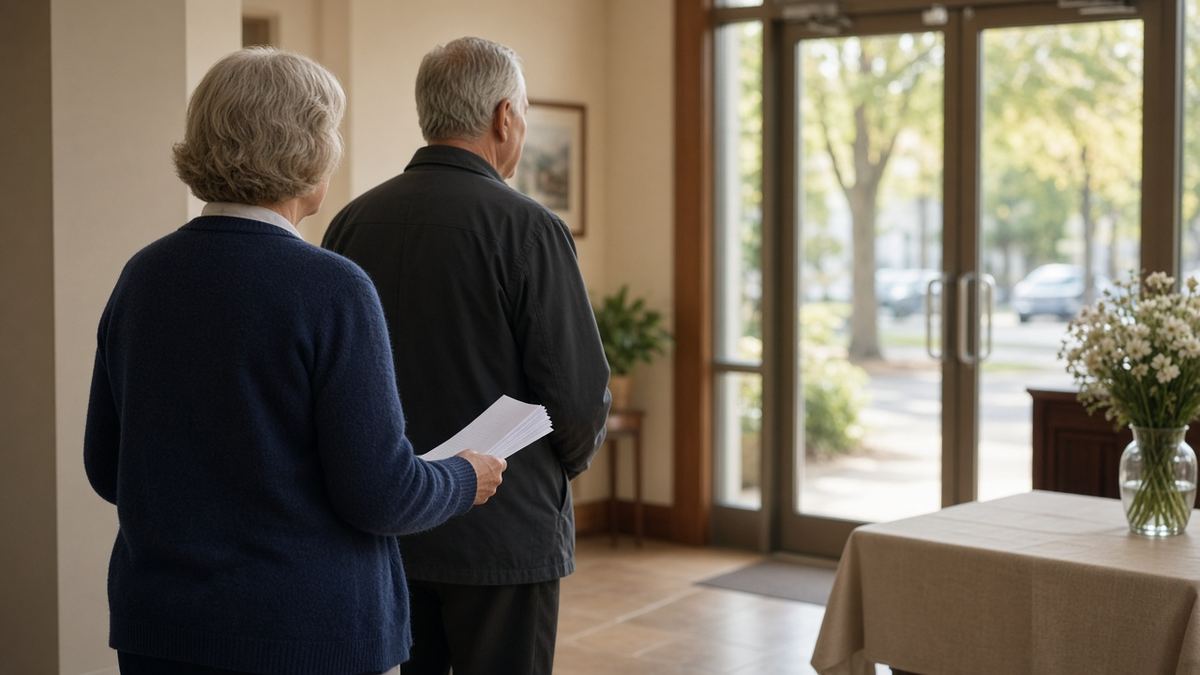
Put the pairs rule in place
Greeters work best in pairs at minimum, and the pair is never women only. That is hospitality and wisdom together. If you only have two greeters, put them at the main entrance. If you have more, cover side doors the same way. Write the pairing rule into your Sunday schedule so it does not depend on memory or last-minute scrambling.
Build the baseline, then notice what doesn't fit
Spend a few Sundays simply observing what "normal" looks like at your doors: arrival patterns, usual coats, familiar faces, typical bags and strollers. Training is not a lecture about worst cases. It is helping greeters trust what they already see. When something doesn't fit the environment, they do not need a dramatic response — they need a calm next step your church has already practiced.
Invite a long-time member to walk a new greeter through a typical Sunday: who usually arrives early, which door families prefer, where latecomers tend to stand. That local knowledge is more useful than a generic handout.
The quiet handoff
If a greeter notices something, she doesn't confront. She makes eye contact with a safety team brother and discreetly points or nods. If a first-time visitor avoids every greeting, a brother on the safety team can walk over with a warm, ordinary hello — for example, "Hi, welcome! How'd you find us?" From there, every team member can be alerted by a short text or your team's usual app. The greeter keeps welcoming the next person at the door.
Practice the handoff once in an empty foyer. A thirty-second rehearsal removes most of the awkwardness before it matters.
Prompts you can try with an AI assistant
Copy a prompt, fill in the brackets, and review the draft with your leadership. AI drafts; your team decides.
"Our church has about [number] people and [number] entrances. Draft a one-page greeter and usher first-minute protocol: serve in pairs (never women only), learn the Sunday baseline, notice what doesn't fit, and quietly alert the safety team without confronting anyone.""Suggest a short Sunday-morning briefing (under 150 words) our greeter pairs can hear before service, covering warm welcome, three awareness notices, and how to signal the safety team.""Write five warm, ordinary greeting lines a safety team member can use when walking up to a first-time visitor who seemed to avoid the door greeters."Welcome and watchfulness together
This step does not promise protection, and noticing something is not the same as accusing anyone. Most Sundays, greeters will only practice kindness. On the rare Sunday something feels off, the church is better served by a warm door team that knows how to pass a quiet alert than by anyone acting alone.
If you are starting a safety plan, put greeter pairs and a quiet handoff on page one. If you already have a team, ask whether your greeters know the baseline, the three notices, and who to signal. Stay warm. Serve in pairs. Let the team quietly alert everyone.
"And we prayed to our God and set a guard as a protection against them day and night." — Nehemiah 4:9 (ESV)
Steeple Guard (SG.ai) shares practical, awareness-level ideas to help churches start or strengthen a safety plan. Adapt every step to your church, your leadership, and your local guidance. No single step guarantees protection.