

Before anyone arrives Sunday, walk the outside of your building. One slow lap can catch small problems early. Whether you are starting a safety plan or strengthening one, this is a quiet, practical habit that costs almost nothing.
An analogy that sticks
Think of a homeowner who walks the property after a storm before guests arrive. They check the porch light, the front steps, the side gate, and the puddle by the door — not because they expect disaster, but because small problems are easier to fix before people show up. An exterior church patrol is that same walk, done for the flock.
What to notice on the lap
Check every exterior door — locked as intended, nothing propped open. Look over walls and windows for new cracks, broken glass, or anything left open. After rain, look for standing water and blocked drains near doors. Note exterior lights that are out, especially at entrances and along walkways. Watch steps and paths for trip hazards, ice, broken pavement, or loose railings. Glance at outdoor equipment, the roof from the ground, the playground if you have one, and the grounds and perimeter. Then log it — what you found, who you told, and photos.
You do not need a clipboard the size of a binder. A phone note and a short photo set are enough. The locked checklist for this patrol has eleven items; the short highlights doors, walls and windows, water after rain, and logging. This article covers the rest — lights, walkways, equipment, roof from the ground, playground, and perimeter — so nothing important stays only in someone's head.
What to do this Sunday
Arrive early enough for one unhurried lap. Bring a phone for notes and photos. Walk with a simple checklist (or the one below). Report anything urgent before people start parking. Keep the tone caretaking, not fearful. It's a simple way to start — or strengthen — your safety plan.
- Exterior doors locked/secured as intended; nothing propped open
- Walls and windows checked for new damage, cracks, or openings
- Standing water / blocked drains noted after rain
- Exterior and entrance lights checked; outages noted
- Walkways and steps checked for trip hazards and loose railings
- Outdoor equipment / AC / utility boxes glanced over
- Roof and overhangs scanned from the ground
- Playground (if any) and grounds/perimeter scanned
- Findings logged with photos and who was told
Have 2 more minutes? Here's how to put it in place.
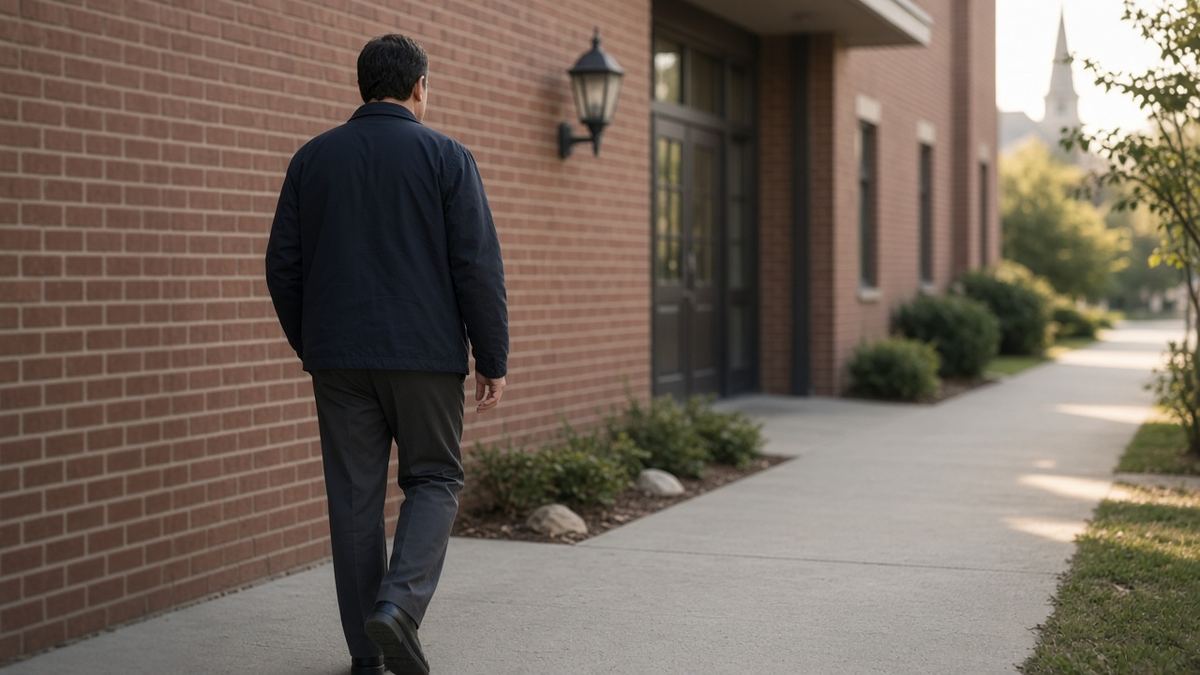
Doors, walls, windows, and water
Start with doors: every exterior door locked or secured the way your leadership intends, nothing propped open, no signs of tampering. Then walls and windows: new cracks, graffiti, broken glass, open panes, damaged screens or frames. After rain, look for standing water against the building, blocked drains, overflowing gutters, and water marks near doors or basement walls. Small water problems become big ones when ignored for a season.
If something is propped open "just for a minute," close it or confirm it was intentional. Propped doors are one of the most common quiet gaps on a Sunday morning.
If two people walk the lap, split the list: one takes doors and the street-facing walls; the other takes the back side, equipment, and playground. Meet at the main entrance, compare notes, and send one message to leadership. Ten focused minutes before people arrive can prevent a scramble after they do.
Lights and walkways (cut from the short — keep them here)
Your short may skip these for length; this article should not. Note any exterior or entrance lights that are out, especially along parking paths and at main doors. Check walkways and steps for trip hazards, ice, broken pavement, and loose railings. These are among the most common real-world injuries at church, and they are often fixable the same week with a bulb, a cone, or a work order.
Equipment, roof, playground, and perimeter
From the ground, glance at outdoor equipment: AC units, generators, utility boxes, cages, and locks. Scan the roof and overhangs for missing shingles, sagging, fallen branches, or debris. If you have a playground, check equipment, ground surface, gates, fencing, and obvious hazards like glass or trash. Walk the grounds and perimeter: fences and gates, overgrown bushes that block sightlines, and items left behind. You are not doing a forensic survey. You are noticing what changed since last week.
Log it, then hand it off
Write down what you found, who you told, and attach photos for leadership or your insurer when damage is involved. A two-minute note after the lap is worth more than a perfect memory later. Share urgent items before service; park the rest for the weekly facilities list.
Prompts you can try with an AI assistant
"Turn this exterior patrol checklist into a one-page Sunday form for a church of about [number] people: doors, walls/windows, water after rain, lighting, walkways/steps, outdoor equipment, roof from the ground, playground, grounds/perimeter, and a log line for findings, photos, and who was notified.""Write a 90-second briefing for a volunteer walking our exterior patrol before service, calm and practical, with no fear language and no promises of protection.""Draft three short text templates a patrol volunteer can send to the facilities lead: burned-out entrance light, standing water by a door, and a trip hazard on the front steps."A step toward a stronger plan
An exterior lap does not promise protection. It is stewardship: noticing the building God has given you before the people arrive. If you have no plan yet, one slow walk and a short log is a faithful start. If you already have a team, ask whether anyone walks the outside before Sunday — and whether lights and walkways are on the list, not only doors.
"Unless the LORD builds the house, those who build it labor in vain. Unless the LORD watches over the city, the watchman stays awake in vain." — Psalm 127:1 (ESV)
Steeple Guard (SG.ai) shares practical, awareness-level ideas to help churches start or strengthen a safety plan. Adapt every step to your church, your leadership, and your local guidance. No single step guarantees protection.