

When something goes wrong at church, people may freeze if they don't know who to go to. Whether you are starting a safety plan or strengthening one, a simple fix helps: make your safety team easy to spot — badge, vest, or both — especially for new visitors.
An analogy that sticks
Think of the AED and the fire extinguisher on your wall. They only help if people can find them in a moment. Your safety team works the same way. Training matters, but training that no one can locate in a stressful minute helps less than it should. A clear badge or vest turns a prepared volunteer into a findable helper.
Long-time members often know who "handles things" on Sunday. First-time visitors do not. Guests look for a visual cue the way they look for a restroom sign. If your team blends in completely, the people who need help most may hesitate longest.
Why visibility matters this Sunday
Visibility shows who's trained to help. It also deters trouble before it starts — not by looking intimidating, but by showing that someone is paying attention. And it makes it clear who sisters can approach when they'd rather talk to another woman. In an emergency, pastors, elders, and everyone else follows the safety team's lead.
You do not need matching uniforms or a large budget. One consistent look — a badge on a lanyard, a vest, or both — is enough for most churches. The goal is calm recognition, not a militaristic appearance. Keep the tone pastoral and practical.
If your church already has ushers in matching jackets or greeters with name tags, build on what people already recognize. Add the safety marker to that known look rather than inventing a second system. Small churches can start with two or three marked volunteers; larger campuses may need a marked person near each major entrance and the children's area.
What to do this Sunday
Ask every serving safety volunteer to wear the same agreed marker. Brief greeters and ushers so they can point a visitor to the right person. Tell your pastor and elders the plan so, if something arises, they know who leads the response. Make your team easy to spot this Sunday.
- Agreed marker chosen (badge, vest, or both)
- Every serving safety volunteer wearing the marker this Sunday
- At least one clearly marked sister available when possible
- Greeters and ushers briefed on who to point visitors toward
- Pastor and elders reminded: in an emergency, follow the safety team's lead
- Spare badge or vest packed for last-minute substitutes
Have 2 more minutes? Here's how to put it in place.
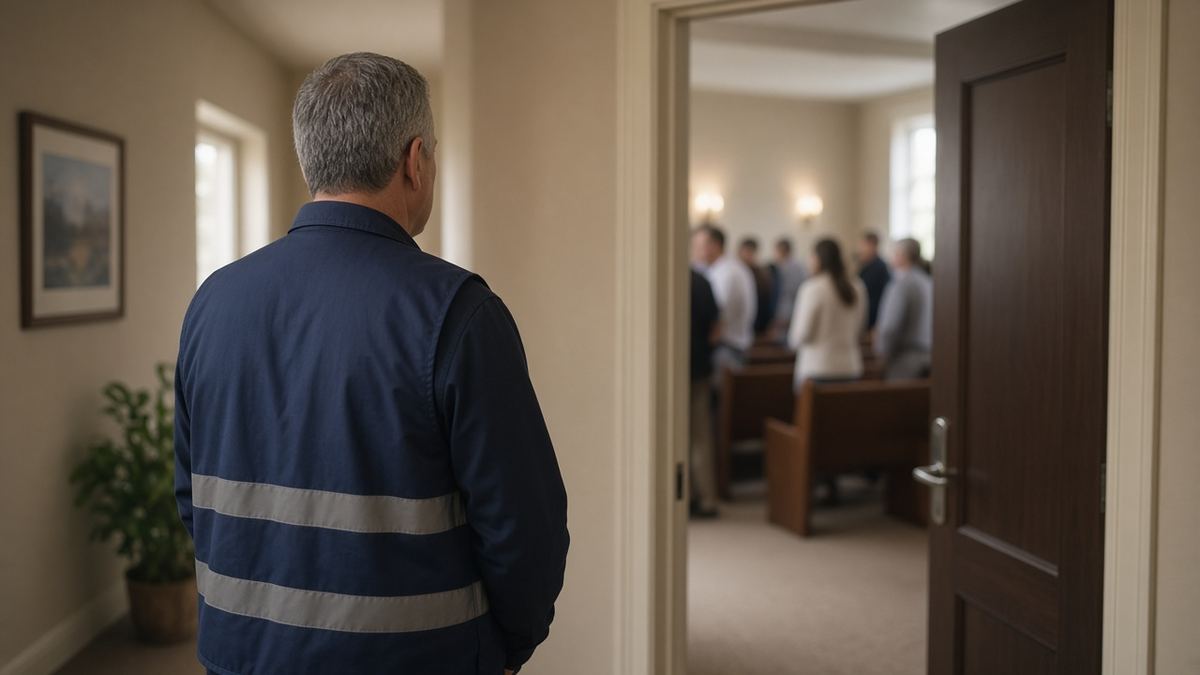
Choose a look your church can sustain
Pick a marker people will actually wear: a badge on a black or navy lanyard, a simple vest, or both. Consistency beats perfection. If your church prefers a quieter look, start with badges and add vests for outdoor posts. Avoid novelty prints and hard-to-read logos. The point is recognition from across a foyer, a hallway, or a parking aisle.
Write the rule down: who wears what, where extras are stored, and who checks the box before service. A substitute who arrives late should still be identifiable within a minute of stepping into the building.
Brief the whole room, not just the team
New visitors should not have to guess. Tell greeters, ushers, and children's workers what the marker means and where the team usually stands. A thirty-second reminder before service is enough: "If someone needs help, look for the navy vest or the badge."
Consider one sentence in your welcome for first-time guests: "If you need anything, look for our team members wearing [badge/vest]." That line is hospitality, not fear.
Practice one "who do I go to?" walk-through with your leadership. Stand where a visitor would stand, invent a simple need (a medical concern, a lost child, a distressed guest), and time how long it takes to identify a marked helper. If the answer is longer than a glance, adjust posts or markers before next Sunday.
Sisters, approachability, and calm authority
Visibility is also hospitality. Some women are more comfortable approaching another woman. When sisters on the team are clearly marked, that option is easy to see. Keep the tone pastoral. Visibility shows who is trained to help; it is not a costume for control. In an emergency, pastors, elders, and others not on the safety team follow the team's lead — a clarity that prevents conflicting instructions.
Prompts you can try with an AI assistant
Copy a prompt, fill in the brackets, and review the draft with your leadership. AI drafts; your team decides.
"Our church has about [number] people and a volunteer safety team of [number]. Draft a short policy note on making the team easy to spot with a badge, vest, or both, including why it helps visitors and what pastors and elders should do in an emergency.""Write a 60-second pre-service briefing for greeters and ushers explaining how to recognize our safety team and where to point someone who needs help.""Suggest three warm ways a marked safety team member can introduce themselves to a first-time visitor without sounding official or intimidating."A step toward a stronger plan
Easy-to-spot markers do not promise protection. They simply remove confusion when someone needs help. If you are starting a plan, put identification on page one beside roles and posts. If you already have a team, ask whether a brand-new visitor could find help in under ten seconds. Make your team easy to spot this Sunday.
"Bear one another's burdens, and so fulfill the law of Christ." — Galatians 6:2 (ESV)
Steeple Guard (SG.ai) shares practical, awareness-level ideas to help churches start or strengthen a safety plan. Adapt every step to your church, your leadership, and your local guidance. No single step guarantees protection.